Recently, a client lost a valued employee.
The immediate response was stress. Leaders worried about the loss of capability, corporate knowledge, and capacity. There was real concern about how the work would get done.
But once the employee was gone, something unexpected happened.
The business paused. Tasks were redistributed. Some work simply… stopped. And within weeks, it became clear that much of the role had been unnecessary activity, work that had built up over time without ever being questioned.
This isn’t an unusual story. It’s becoming a pattern.
At the start of a new year, many businesses instinctively look to add: new goals, new systems, new initiatives. It feels productive. It feels like progress.
But more often, the real issue isn’t what’s missing. It’s what’s still there.
Across many organisations, complexity isn’t a result of design, it has accumulated. Legacy systems remain long after they stop serving the business. Manual processes persist even when better solutions are obvious. Reports, meetings, and workarounds continue simply because “that’s how it’s done”.
Rarely do we stop to ask the simplest and most powerful question: Why are we doing this?
In Rogue Heroes, which tells the story of the formation of the SAS, recruits were encouraged to ask “why?” An unusual practice in a military environment. This wasn’t about defiance or insubordination. It was about understanding intent.
The founders knew that people perform better under pressure when they understand why they are doing something, not just what they are doing. Clarity improves execution.
Business often struggle with this more than the military ever did. Over time, organisations inherit decisions. Processes that once made sense go unchallenged. Friction is tolerated because changing it feels harder than living with it. Arguments about sunk costs are formed. Slowly, businesses become weighed down, not by meaningful work, but by unnecessary effort.
The cost doesn’t show up neatly on a balance sheet.
It shows up in slower decisions, frustrated teams, and leaders feeling busy but not effective.
Many businesses aren’t struggling because their people lack capability.
They’re struggling because too much of the work no longer makes sense.
This is where a stop doing list can assist. Not as an exercise in minimalism, but as a leadership act.
If you want to introduce one, keep it simple:
- Identify work that no longer serves the business
- Challenge legacy systems and habitual processes
- Remove friction before adding anything new
- Ask “what would really break if this stopped?”
In a world that continues to speed up, it’s not the busiest teams that win, it’s the ones who can pause, make sense, and choose deliberately.
Before adding anything new this year, ask one question: What no longer needs to come with us?
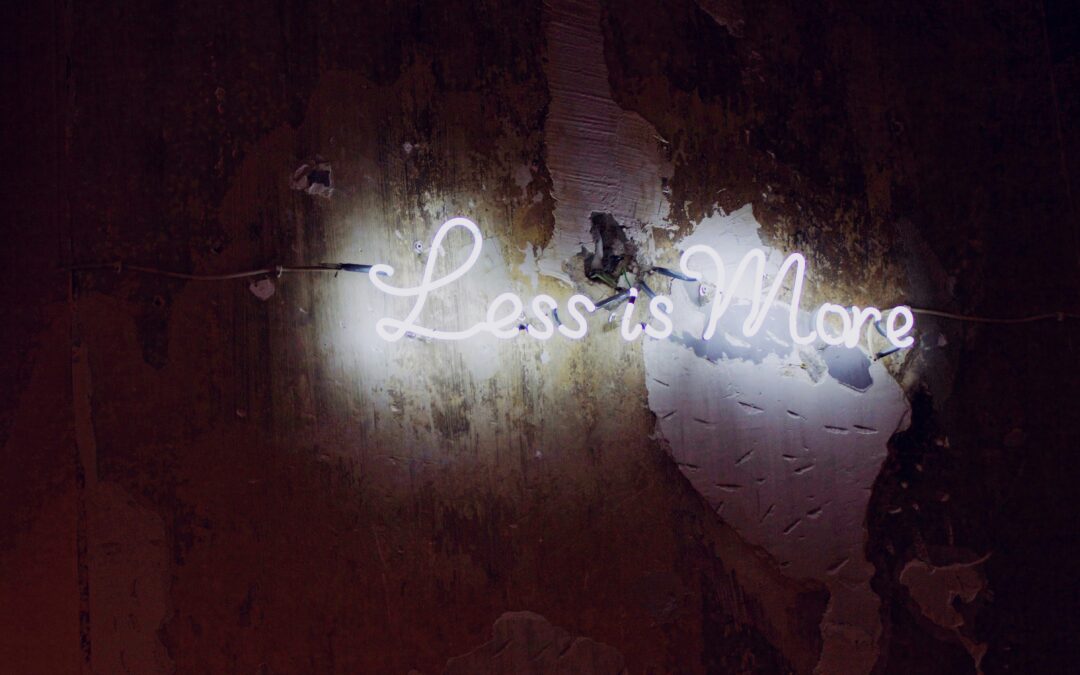
Sometimes, the most strategic move a business can make is to stop doing something.