

Most teams have goals, deadlines and reporting lines. But far fewer teams take the time to define how they want to work together.
A Team Charter is a simple but powerful way of setting out the shared expectations for how a team operates: how people communicate, how decisions are made, and the behaviours the team commits to demonstrating with each other.
At Focus HR, our own team is currently going through this process. Like many good people practices, it’s one thing to support clients through it and another to pause and apply it to ourselves.
We started by asking our team to reflect on what our culture feels like right now. From that feedback, we worked together to identify the behaviours we want to START, STOP and KEEP. That conversation is now helping us shape the principles that will form our Team Charter.
What’s powerful about this process is that it makes the unspoken expectations within a team explicit.
For example, if a team agrees that one of their commitments is to have honest conversations, it creates permission for people to speak up, provide feedback and address issues early. Instead of avoiding difficult discussions, people can point back to the charter and say, “This is part of how we agreed to work together.”
When behaviours are captured as part of a team’s shared ‘rules of the road’, they help set the standard for what’s acceptable and expected.
A good charter might include principles such as:
-
We address issues directly and respectfully
-
We assume positive intent
-
We follow through on commitments
-
We support each other when workloads are high
Every Team Charter will look a little different, because the principles should reflect what matters most to that team and organisation.
One of our favourite examples comes from the All Blacks, whose team charter famously emphasises humility and shared responsibility, captured in the idea of “sweeping the sheds”. No one is above the team, and everyone contributes to maintaining the culture.
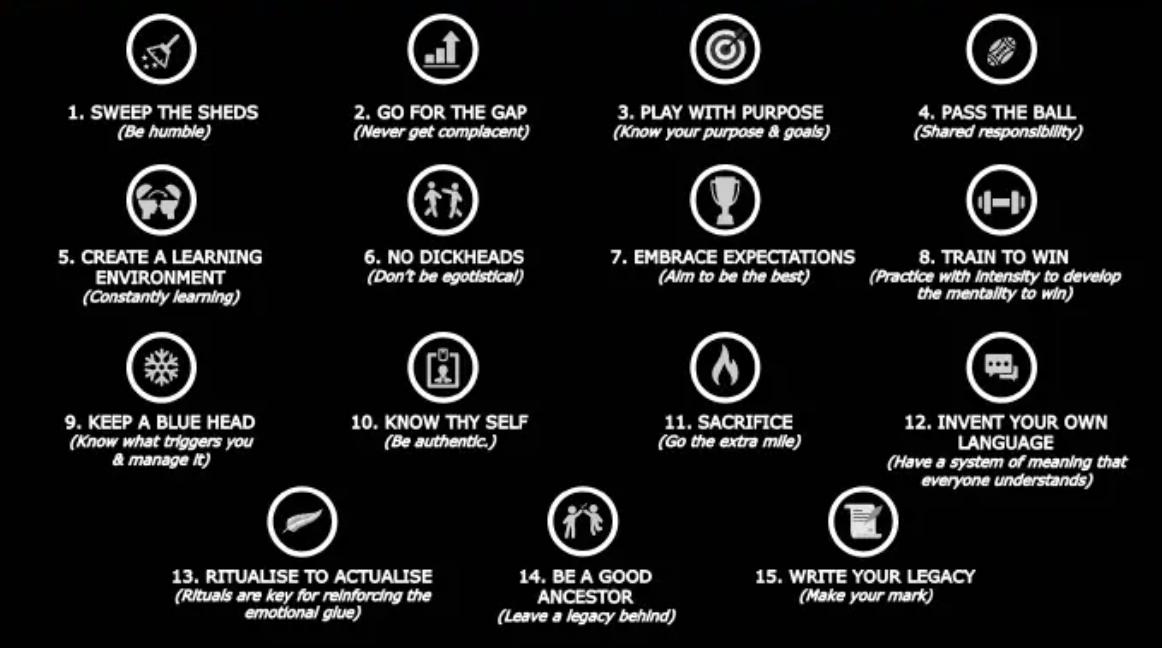
A Team Charter doesn’t need to be complicated. But when expectations move from being assumed to being agreed, it becomes much easier for teams to hold each other accountable and build the kind of culture they want to be part of.
Thinking about creating a Team Charter with your team?
If you’d like to embark on this journey, talk to Focus HR about how we can support you on your culture journey.